About Me

My photo
With more than 50 years of travelling about in India, one can share a good deal of information and experience about out-of-the-way places and roads less travelled. That can make visits all the more exciting and enjoyable.

Thursday, 29 April 2021

"God's own Country" - "Theyyam" ceremony at Parasinikaduvu

Kerala is widely renowned and publicized as "God's Own Country". This is both literal and metaphorical - as Kerala is wonderfully beautiful, as God's own country should be. But it is so also in the literal sense as it is dotted with shrines and temples to so many gods, some known and many not so well-known outside of Kerala. The "Theyyam" ceremony is to be widely seen in the northern region of Kerala, near and around Kannur and Thalassery. It is said the word "theyyam" is derived from the word "daivam" and it is basically an invocation of a major god of the Hindu pantheon, such as Vishnu or Shiva or Bhagavati or of some lesser-known god, such as Muthuappan. Parasinikaduvu is situated about 30 kms from Kannur town and is a major venue of the "theyyam" ceremony. It commences in the evening and goes on for 3/4 hours with a series of rituals and chantings, enlivened by the music of the "chhenda", or the long drum popular in Kerala, and the nadeswaram, or a sehnai-like wind instrument.Here the rituals are for the folk god, Muthuappan.
This picture shows the votive lamps at the Parasinikaduvu ceremony in December 2012.
As may be seen in this picture, the priests usually wear a special head-dress and garments for the ceremony and often hold a sword in the hand. It is said that the priest often goes into a trance and is able to tell the future and fortunes of a devotee who approaches him at the time. A visitor from out of state would find the Theyyam ceremonies of much interest,

Monday, 19 April 2021

The New Farm Laws in India - A Consideration

The Farmers (Empowerment and Protection and Farm Services) Act, was gazetted in the Gazette of India New Delhi, the 27th September, 2020 and takes effect from 5th June 2020. The Statutory Rules for this Act are however yet to be notified and placed before Parliament. These new laws have evoked considerable controversy and debate. While the Government of India has claimed that the new farm laws would help the farmers, it is seen that the farmers are denying this claim and to the contrary publicly stating that these new laws would harm them. Under the circumstances, it is important that those interested or concerned about this development should find out for themselves as to what is what. The new Farm Laws are available to download from the Internet and individual citizens and the press are free to study these and make their views known. A preliminary study of the new farm laws indicates — (a) some points need clarity in the “definitions” clause. For instance, the definition of “farmer” is defective – it mentions only “individual”, who may not be an Indian at all, but may be a foreigner. It is not clearly provided that farmer should be “an individual citizen of India”, personally engaged in and supervising the farming activities. The term “Farming” is also not defined , e.g. as use of personally-held or family-held agricultural land, for production of cereal crops, pulses, oil seeds, cotton, jute, sugar cane and specifically excludes, large organized plantation industries like tea, coffee, spices, coconut, areca-nut, cashew nut, etc. ”Farmers Produce Organization” is not clearly defined. The role and function of the so-called “Sponsor” organization is also not defined and apparently merely either replaces the current middlemen or are middlemen by a different name. Certain terms used in the Act have not been defined, e.g. “farm gate” (b) there is reliance on legally enforceable agreements or contracts and this may pose serious problems for the small and marginal farmers (if not most farmers across the board) in understanding and implementing such agreements as most of them are not so literate as to understand legal provisions; (c) Clause 13 of the new Act realted to Dispute Settlement.This provides that representation of parties shall be “fair and balanced”. This is vague and may again lead to unnecessary litigation. This should be re-worded to provide for three members of a Conciliation Board and two members each representing farmers/FP and the buyers and that the majority view of the Board shall ordinarily prevail. (d) Clauses 16 to 20 provide that any decision that any government agency may take in respect of any dispute arising from such agreements cannot be challenged in a court of law.This is a deviation from most laws that do provide for an appeal procedure in a court of law or a tribunal. On the practical side, the small and marginal farmers who form the bulk of the farming community in terms of numbers, usually have just 4–5 acres of land and are therefore engaged more or less in family-based subsistence farming with little or no surplus grain to be sold in the market. Their “staying power” is limited and they often get into debt in case of crop failure. On the other hand, it is the larger farmers who have surplus rain for the market, but they also have higher costs because of labour employed, diesel or electricity costs for pumping water, use of fertilizers and pesticides, etc. They also need a reasonable return on their fixed and variable costs to be able to sustain production year after year. Hence the importance of MSP, which has been in operation for over 40 years and has sustained growth in cereals output - the foundation of “food security” in india - over these years. There is a need also to boost oil -seeds and lentils production in the country, which may also require some sort of MSP. Thus there is a need to study the new farm laws at first hand and to engage in informed debate and discussion.

Saturday, 10 April 2021

Stained Glass in Kolkata churches

The art of "stained gass" in which molten glass is stained in small batches with mineral colours and is later assembled into large pictorial windows, was imported from Europe into India in the 18th and early 19th centuries, and especially into Kolkata, which at that time was the centre of the British administration.
This picure is of the stained glass to the right of the alter at the St. John's Church on Council House Street near BBD Bag in Kolkata.
The stained glass window at St. Thomas' Church on Middleton Row close to Park Street in Kolkata, is quite large and colourful.

Saturday, 27 March 2021

Bird-watching in the Sukhna area

The old Hill Cart Road takes one past the small town of Sukhna on the norther fringes of main rail-head for North Bengal at New Jalpaiguri. Then the road climbs past the village of Rongtong and passes - with the tracks of the narrow-guage Darjeeling Himalayan Railay weaving in and out - past other villages like Chunabhati, Tindharia, Ghayabari up and up till it reaches the famous hill-station of Drajeeling after a total of about 55 kilometres. Most people travel to the Drajeeling hills to watch the sun rise and set on the snows of the Kanchenjungha Range. But some people take it into their heads to do bird-wtching for interesting species in the lower foot-hills in the Sukhna-Rongtong area. Since this is close to the Mahananda Wildlife Sanctuary,"anything is possible". And it is the "surprise" element that makes it all the more interesting: while looking casually at a common species suddenly one can catch the glimpse of of something different, something new.
The trip to the Sukhna- Rongtong- Mahananda in March 2021 after over a year of Covid restrictions was certainly envigorating.

Wednesday, 3 March 2021

Birdwatching at Manglajodi

There are quite a number of good birdwatching areas in India and a very good site for water birds in Eastern India is the Manglajodi site. This is one of the back-waters of the Chilka Lake and is located near the town of Bhubaneshwar in Odisha. Thus it is about six hours train journey from Kolkata and about an hour's journey by vehicle to reach there. It can well be combined with a visit to the temple city of Pur, which is not far away, and the archaeological sites near Bhunabeshwar. It was once a well-known site for poaching of birds but thanks to efforts of Shri Nanda Kishore Bhujbal, a local enthusiast, the poachers were persuaded to become conservationists and thus the Shri Bhagwan Mahavir Pakshi Raskha Samity was formed in 2010. Since then the birds have been provided with strict protection and many of the local men have become boatmen and guides. They have come to acquire excellent knowledge of the habits of birds and the habitat and can make a good living with the stream of bird-watchers and tourists coming to the location.
Thesew few pictures will convey the sense of the nature of the habitat of Manglajodi and the rich birdlife that it offers.

Thursday, 11 February 2021

Karla - An unfrequented Buddhist site

While tourists throng to places like Sarnath and Sanchi to visit places noted in history and lore of Buddhism, Karla, which just about forty kilometres from Pune in Maharashtra, just off the main Pune-Mumbai highway, is far less frequented. And yet Karla boasts of a history dating back to the 2nd century BCE, when Buddhism was fast spreading into peninsular India. Of course, the approach to Karla is over a fairly long stone stairway and "senior citizens" will need to take this carefully.
The picture above shows the front facade of the Karla cave with its distinctive architecture and entrance-way.
The "chaitya" hall, or where the Buddhist monks once assembled for prayers more than two thousand years ago, is fairly large and is marked by a stupa to designate the impression of the Buddha, while overhead the roof is sculpted in imitation of the wooden rafters that were used even earlier for such prayer halls. Along the two sides are pillars with capitals similar to those in Ajanta and other Buddhist sites, and marks the places where monks used to sit for the prayers.

Sunday, 31 January 2021

Indian economic development - some fresh thoughts

There had been times when a GDP growth of 3.5 or 4% per annum in India was thought to be remarkable. Nowadays, people feel somehow disappinted if the growth rate registers 7.5% rather than 8%. There had been times when inflation had been over 25% in a year (and the people have had to live with it). Presently, even a 10% inflation rate is popularly unacceptable. For the Reserve Bank of India, the target is to keep inflation within about 6%. Gone are the times when one had to wait for days to get a cement permit sanctioned for building construction or even to make an outstation call to a relative or to queue for hours to get a berth reervation in a train. Now's the time for messages "at the speed ofight", with the wi-fi or "hot-spot" willing, on-line pruchases of most commidities, and on-line train reservations. This did not happen overnight. But how did it at all happen? To get a glimpse of this, have a look at the book "Eco Yatra", published by Tata McGrawHill - this speaks of traversing the path of India's economic change for the last six decades. It tells the story of how this change took place over the last 60 years or so, when in 1952 Jawaharlal Nehru presented the nation with the First Five Year Plan with an investment plan of just Rs 2,070 crore (in comparison, the Tenth Plan 2002-2007 had an outlay of Rs 1,484,131 crore). It sifts through hard economic data, while bringing out the broad trend lines, without losing sight that economic development also has an underlying human dimension. Thus, at one level, the book traces the changes that impacted the people at a human level; at another, it takes the reader past the major milestones on the road to economic change over the last 60 years; not in a bookish way, but as a chronicle of national and individual aspirations and achievements.
Copies of the book are available with Amazon. Check at -- -- https://www.amazon.in/Eco-Traversing-Indias-Economic-Decades/dp/0070680698/ref=sr_1_6?dchild=1&qid=1612095758&refinements=p_27%3AProsenjit+Das+Gupta&s=books&sr=1-6

Friday, 15 January 2021

"Tracking Jim" - Notes on Jim Corbett, the famous hunter of man-eating tigers

The Corbett National Park, originally called the Hailey National Park when it was set up in 1930s, has been re-named after the famous hunter, Jim Corbett, who had lived practically all his life in the hills and foot-hills of Nainital in Uttarakhand. The family lived at Gurney House in Nainital in the summer months, coming down to the village of Kaladhungi (also called Chhota Haldwani), in the foot-hills, for winter. The Gurney House and the Kaladhungi bungalow have now been turned into museums in memory of the renowned hunter. It was also in the neighbourhood of Kaladhungi that Corbett had his first initiation in the ways of the jungle under his elder brother, Tom, who was in the Indian Postal Service. Corbett has written of these experiences in his two books, "Jungle Lore" and "My India" though there are some glimpses also in his other books.
Above is a picture of Gurney House, situated at Ayarpata, up on the hillside on the southewestern side of Nanital Lake. And given below is a picture of Corbett's bungalow at Kaladhungi, which has now been turned into a museum by the Forest Dept., Govt. of Uttarakhand. Kaladhungi is siutated on the road almost mid-way between the towns of Haldwani and Ramnagar.

Monday, 28 December 2020

Sunderbans- the story of Ban-bibi

The Sunderbans, at the south-eastern border of India and Bangladesh, is one of the largest mangrove forests in the world, spanning about 5000 square kilometres. This has also been been the scene of a long-standing man-tiger conflct, with a number of human deaths each year attributed to man-eating tigers. The Sunderbans are approachable by driving about a hundred kilometres to the south-east of the metropolis of Kolkata and then taking a mechanized boat from either Canning or from Gosaba.
The fishermen and honey-collectors living in the area are great believers in prayers to Ban-bibi before entering the mangrove forests. Ban-bibi is said to have had a miraculous birth and is equally revered by the Hindu and Muslim people in that area. At about that time, "Dakhin-rai" was a despot who tried to maintain his rule by offering human sacrifices to the wild tigers inhabiting the mangrove forests. One day Dukhey (the very name suggests a "sorrowng one"), a poor fisherman was to be so sacrificed to the tiger, and he prayed long and earnestly to Ban-bibi for succour. The goddess answered his prayers and threated Dakhin-rai that she would put an end to his depradations. Dakhin-rai submitted to the goddess, who then took Dukhey on her lap and consoled him. This legend is widely believed in the region and shrines to Ban-bibi may be seen at many places in the Sunderbans.

Saturday, 12 December 2020

"Dhokra Art" - Basic Facts

“Dhokra” is a common folk art form in India. This is widely practised in many tribal areas of India, but mainly in central India, such as in Madhya Pradesh, and Chattisgarh, as well as in Odisha, Jharkhand and West Bengal. This art-form for making castings in brass or bell-metal (these being varying compositions of copper, zinc and occasionally a bit of tin or arsenic) relies on the “lost-wax” process of casting. The “lost-wax” process is so-called because the forms and designs are made in bees’ wax or some similar malleable materials that volatilizes and evaporates or is otherwise “lost” in the process of heating up the rough casting in a furnace. The process starts with craftsman or artist making a rough clay figurine or shape, say of a horse or a bull, or some local deity, or a utility item like a candle-stand, as the core for the casting. This clay, usually from a river bank, is finely ground and sieved and then shaped and dried in the sun. The surface of this “core” shape is thoroughly smoothened and the craftsman proceeds to cover this fully with fine extruded threads of bees’ wax. Over this are placed the actual designs as diamond-or star-shaped or coiled arrangements in bees wax and the finer details of eyes, ears, clothing, ornaments, etc. (also in bees wax) are added on. This wax-coated core is then covered with clay, also finely sieved and of a soft texture, and allowed to dry in the shade for a couple of days. This is then coated with a thicker and coarser layer of clay mixed with rice husk, taking care that at one point, either at the top or bottom of the shape, an aperture is kept open with a couple of thin bamboo sticks. This whole is then again dried in the shade for a couple of days.
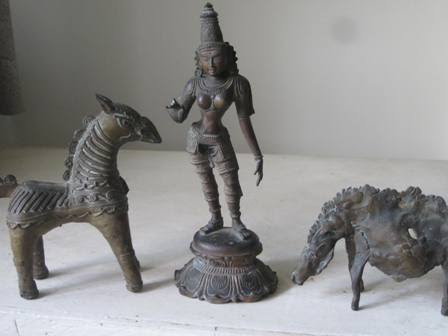
The above photo shows three different types of "lostwax" art - the typical folk style, the South Indian statuette and modern art college piece. It will be realized that with this process the wax designs made on the inner core have made for a gap of about 1.25 to 1.5 mm (i.e. the diametre of the extruded wax threads) with the other clay coating, carrying the imprint of the patterns and designs on the inner surface of the clay coating. The rough casting is then placed in the furnace together with a small pot carrying the brass or bell-metal scrap fixed firmly where the bamboo sticks emerge from the aperture. This whole is then heated in a furnace with the pot of scrap metal at the bottom and bellows are used to induce the furnace temperature to rise to more than 900 deg. C, which the melting point of brass. The bellows are kept going for an hour or an hour and half till the clay casing starts glowing yellowish red. With practice and experience the craftsman knows when to take the next step and this he does by clamping the red-hot piece with long iron pincers and swiftly turns it over so that the molten brass or bell-metal now flows down by gravity and occupies the space for the patterns and designs left on the inner clay core as the bees wax would have by now long volatilized and evaporated. The casting is allowed to cool in the shade for an hour or so and then outer clay casing is broken open and the final cast figure emerges. This is then cleaned with light brushing with an iron brush and further finished if required with a steel file. Strange as it may sound, this same “lost-wax” process has been used also to make the famous “Tanjore Bronzes” in Tamilnadu as well as the well-known Benin Bronzes from West Africa. Of course, in such cases the clay core has been much smaller and the bees wax coating considerably thicker and smoothened over with fine iron implements. The finer details of eyes, nose, ears, hands etc, are usually later sculpted on the cast figurine with fine iron instruments and the figure finished with steel files, sand-papering and buffing.
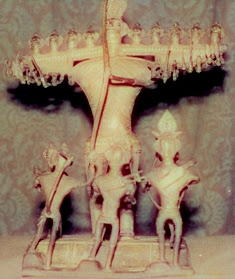
This picture is of a traditional Dhokra item from Bastar in Chhattisgarh, of Rama and Lakshmana confronting the demon Ravana.

Wednesday, 2 December 2020

Sino-Indian Border Conflict - a view-point

Recently, Bookgeeks reviewed the book entitled "A Conflict in Thin Air" about the Sino-Indian Border Conflict. The review stresses the detailed research that went into thw writing of this book and the wealth of details about Tibet, China and British India that shaped the the origins of this conflict. The link to the review is as follows - https://www.youtube.com/watch?v=4mbXnhg7RJ4

Tuesday, 24 November 2020

Iran - some more views

Iran has attracted me for many years, on account of a sense of cultural proximity, some degree of linguistic affliation, and of course, historical interactions. But it was only in 2017 I was able to visit Iran with some friends but we had to get over the initial provblems of making out an itinerary, making foreign exchange remittance to make bookings, etc. Besides Tehran, we were able to visit the main cities like Shiraz, Isphahan, and lesser-known places - at least to the general tourist - of Yazd, Kashan and Qum.
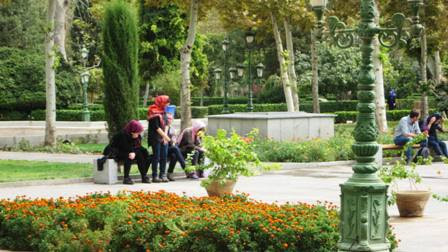
These pictures (top two in Tehran) and bottom one in Shiraz) have been given to provide a glimpse about modern Iranian society and their interests and concerns: thety were as happy sitting in a garden or visiting a place of historical ietrest as any other.
The above pictre was taken at the Nisar-ul-Milk Mosque in Shiraz and shows an Iranian lady taking a photo of the stained glass window.

Sunday, 15 November 2020

The Bathing "Ghats" of Kolkata

The bathing "ghats" are part of the cultural tradition in Kolkata. Situated mostly on the eastern banks of the River Hooghly, itself a branch of the holy Ganges, the "ghats" or the steps leading to the river, at times with nice pavilions to shelter from the sun, go back nearly three hundred years. These sites are shown in several of the old maps. This one is from Upjohn's map of 1794, showing some of the "ghats" to the north of the present city.
The "ghats" are places where many people assemble for religious ceremonies on designated auspicious dates. A dip in the river is still considered to be part of a purification ritual. Many carry away a little bit of the river water to wash some part of their home or to use it for some household religious ritual.
Several of these "ghats" are linked up with the history of Kolkata, such as the Prinsep Ghat named after James Prisep, who first decoded the Brahmi script of Ashokan edicts, oe Babu Ghat, named after the husband of Rani Rashmoni, who in the mid 19th century had bested the British admnistration on several ccasions.

Sunday, 8 November 2020

Dholavira - A Indus Valley Civilization site in India

The Indus Valley Civilization (or IVC for short) that grew up in the valley of the Indus River about five thousand years back, is well-known. Not so well-known is the fact that almost contemporaneously, sites similar to the well-known sites of Harappa and Mohenjo-Daro also grew up in parts of Western India. One such site is Dholavira near the town of Bhuj in Gujarat. It is at some distnace of about 220 kilometres to the north of Bhuj and it takes about four hours to drive up each way.
The drive is quite pleasant especially in the morning in cold weather. The remarkable thing to be seen at Dholavira is the rain-water harvesting system with channels running down from the hillock down to the terraced water reservoirs at the bottom of the hillock, as may be seen in this picture. The Local museum of artefacts recovered during the archaeological excvations at Dholavira is also inetresting.

Friday, 30 October 2020

Discovering Calcutta - A book now in Bengali

 There are many books on Calcutta in both English and Bengali. Some deal mostly with the history, some are about a few of the well-known families of the city, some are on the Bengali cuisine, etc.

There is now - thanks to Ananda Publishers - a book that takes the reader around in easy-paced walks to discover the city for oneself. 


This book, "Paye Paye Kolkata" (or, Walks in Calcutta) guides the reader along the main routes to see the city more fully, in its history, architecture, something of its social history, the eateries, and so many things. There are sections on old maps of Calcutta, the well-known sweet-meat shops, old paintings and lithographs, and so on.  The book is available at most retail outlets, or from the office of Messrs. Ananda Publishers.


Wednesday, 21 October 2020

Orchids - Jewels of the Flower World

 Flowers of the orchid plants have some of the most interesting shapes and colours that one can find in the plant world. 

India has over 1200 orchid species growing in various parts of the country, out of which over 500 orchid species grow primarily in the Himalayan foothills at elevations of about 250 metres to about 2500 metres, and many of them in Northeastern India. Some of the best places to see orchids growing - some grow in autumn and many in spring and summer - is in in the Darjeeling Hills of West Bengal and in Sikkim, which is close by. 

Aerides odorata

Dendrobium nobile


Rhynchostylis retusa

Some of these, especially the Aerides species, or the well-known Vanda roxburghi or the Rhynchostylis retusa are able to tolerate a good deal of heat and can grow even in the plains of central India.  Many grow in Assam and in Arunachal Pradesh and other states of the Northeast.

Sunday, 11 October 2020

Yakshagana - folk theatre of North Karnataka

 India has a rich heritage of folk theatre. These range from the "Chhau" of south-western West Bengal and northern Odisha to "Lai Haroba" in Manipur. And there is the colourful "Yakshagana" of North Karnataka, full of verve, vigorous dances and fine singing to the accompaniment of the traditional "chhenda" drum. The main centres are near Honavar and Bhatkal in North Karnataka, which may be approached by a 5 or 6 hour journey by train or vehicle from Bangalore or from Goa.  A major teaching facility is of the Idagunji Mahaganapati Yakshagana Mandal.


 Here, Shri Keremane Shivananda Hegde, who is the third generation teacher and performer, provides instructions in the intricacies of the dancing steps and movements as also in the hymns that are sung during the performance. 

This theatre form seems to have emerged about 400 years ago, and is primarily based on themes taken from the Ramayana and Mahabharata. This is now performed not only in the big cities like Bangalore and Mangalore, but also is also very popular in the smaller towns, where travelling troupes, such as that of Idagunji Mahaganapati Yakshagana Mandal peform, mainly commencing with the winter season.  

Tuesday, 6 October 2020

Bowali - An interesting Suburb of Kolkata

 Bowali, which is a suburb of Kolkata on its south-western fringe, is historically notable. Approachable via Tollygunge, Behala and Bakrahat, Bowali at one time was the ancestral residence of the Mondal family that had large land-holdings in that area dating back to the 18th century. Even now, some of the relics of that age, such as the "Rasha-mancha" shown below, may be seen.


One section of the family broke away in the late 18th century and came over to the Tollygunge area of Kolkata, just next to the famous Adi Ganga. Here was constructed in 1797 the huge "nava-ratna" or nine-pinnacled temple to the deity, Radhabinode by Ramnath Mondal of the Bowali family. It is said that this was taken as the model for the famous Dakshineswar temple built by Rani Rashmoni to the north of Kolkata.  


Tuesday, 29 September 2020

India - the economic scenario

 The Covid-19 has cast a haze of doubts and confusion over the economic scenario in India. The restrictions necessary to combat the virus have severely impacted economic activity despite recent government efforts to revive the economy. 

That laws, plans, and programmes do not lead to near-term results have been known for many years. Ever since the initiation of the Five Year Plans in India in 1952, the gap between promise and performance has persisted. In a country as large and diverse as India, opening of economic flood-gates does not ensure that the benefits will duly percolate to the individual farmer and farm-holding. 


Partly this has been due to the growing population and partly because the basic realities of the wide-spread poverty and out-dated technology levels in many sectors, especially in agriculture. These issues were  dealt with in the above-mentioned book and the need for political positions to take due account of economic realities was highlighted. Moreover even with the best of intentions, the complexities of implementation and management were not duly provided for, leading to severe economic road-blocks. 


Wednesday, 23 September 2020

Bastar - Fade-out of a Tribal Culture

 Bastar is a major part of the state of Chhattisgarh. It is to be reached from the rail-head of Raipur, by a drive of about 150-160 miles. One may also reach the main headqaurters at Jagdalpur by train from Vishakhapatnam that runs to Kirandul near the Bailadilla Hills; this train journey is  picturesque with many high bridges and tunnels.

The population of Bastar was mainly tribals of Gond origin, such as the Muria, Bison-horn Maria, the Hill Maria, the Dhurwa, Poroja, and others. They were living in the hills and forests of Bastar, around the villages (now towns) of Antagarh, Kondagaon, Narayanpur, Jagdalpur,  Dantewada and Sukma. It was a difficult life as the terrain is hilly and the soil  stony. But they still had their songs, and dances, their arts and crafts. Their gods and goddesses like Burha Deo and Telgin Mata had their abode in the same hills and forests. 


But with time, trade and commerce with neighbouring districts and states increased. This affected tribal life in many ways, and the old practices, the old songs and dances were progressively discarded. Whether Bastar will still be able to hold on to what is distinctive about  their culture only time will tell.